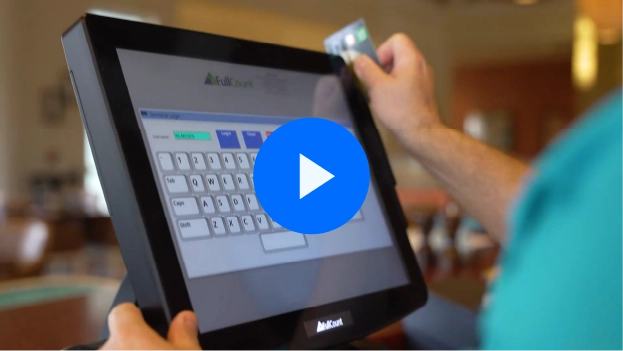



Higher education dining is no longer just a set of dining halls. It is a high-volume, multi-location operation that combines retail, hospitality, and account-based billing. Thousands of students move through cafés, food courts, and grab-and-go markets in short windows, all while using meal plans, declining balances, and campus accounts.
At the center of this operation is the POS system.
But campuses are not simply buying a POS. They are trying to fix real operational problems. Lines are too long. Meal plan tracking is inconsistent. Reporting takes too much manual effort. Systems feel rigid and difficult to change.
Choosing the right platform means solving these problems at the root. Here is how to evaluate a campus dining POS the right way.
Campus dining does not operate at a steady pace. Demand spikes hard during lunch and dinner. In those moments, speed is everything.
When the POS slows down, everything slows down. Lines grow, staff feel pressure, and students get frustrated. Many legacy systems were not designed for this kind of throughput. They prioritize control and structure over speed at the point of service.
The right system is built for high-volume environments from the ground up. It should allow staff to move quickly through transactions with minimal steps, while still applying the correct pricing and account logic.
FullCount is designed specifically for these peak conditions, supporting fast transactions across busy campus environments without slowing service
The outcome is simple. Faster checkout, shorter lines, and a better student experience during the moments that matter most.
Campus dining runs on meal plans. Declining balances, swipes, hybrid plans, and staff allowances all need to be handled accurately at the point of service.
Many POS systems rely on integrations or manual processes to manage this. That creates gaps. Staff have to remember rules. Finance teams have to correct errors. Reporting becomes harder to trust.
A better approach is to treat meal plan logic as part of the transaction itself. The system should automatically apply the correct rules every time a student checks out.
FullCount handles meal plans natively, applying balances and rules in real time so staff do not have to think about it
This leads to accurate billing, fewer discrepancies, and a significant reduction in administrative work for finance and operations teams.
Most campuses operate multiple dining concepts. Dining halls, cafés, retail outlets, and convenience stores all run at the same time. When each location behaves differently, complexity increases quickly.
Menus become inconsistent. Pricing varies. Staff need to be retrained for each venue. Reporting becomes fragmented.
A strong POS platform creates consistency across the entire campus while still supporting different service models. Menus, pricing, and workflows should be centrally managed and automatically reflected across all locations.
FullCount enables a single system to power all campus dining environments, reducing manual coordination and keeping operations aligned
The result is a simpler operation that is easier to manage and scale.
Students expect speed and convenience. They want to move through lines quickly, check their balances easily, and order food without friction.
If the system does not support this, staff end up filling the gap. They answer balance questions, manage long lines, and handle more manual orders than necessary.
A modern POS ecosystem extends beyond the register. It includes online ordering, self-service options, and clear account visibility for students.
FullCount supports online ordering and real-time account visibility, giving students more control while reducing interruptions for staff
This shift improves satisfaction on both sides. Students get a smoother experience, and staff can focus on service instead of managing bottlenecks.
Dining operations generate significant revenue, but many teams still rely on delayed reporting and manual reconciliation.
When data is not available in real time, decisions are slower. Finance teams spend more time validating numbers. Leadership lacks a clear view of performance across locations.
A modern POS should provide immediate access to transaction data, with item-level detail and automated reporting outputs.
FullCount delivers real-time reporting and billing data, removing the need for manual exports and improving financial oversight
This creates a more controlled and predictable financial operation, especially during month-end close.
Some campus systems are powerful but rigid. They require heavy IT involvement, take a long time to implement, and are slow to adapt when dining models change.
That becomes a problem as campuses evolve. New service models, new venues, and new student expectations require flexibility.
FullCount positions itself as a modern alternative, delivering campus-scale performance without the weight and rigidity of legacy platforms
The right system should make it easier to adapt, not harder.
Choosing a campus dining POS is not just about replacing technology. It is about improving how the entire operation runs.
The right platform will help you serve students faster, manage meal plans accurately, reduce staff workload, and give leadership better visibility into performance.
In higher education, speed, scale, and financial clarity are not separate goals. They are tightly connected.
A POS system that brings those together becomes more than a tool. It becomes a foundation for better dining operations across the entire campus.